

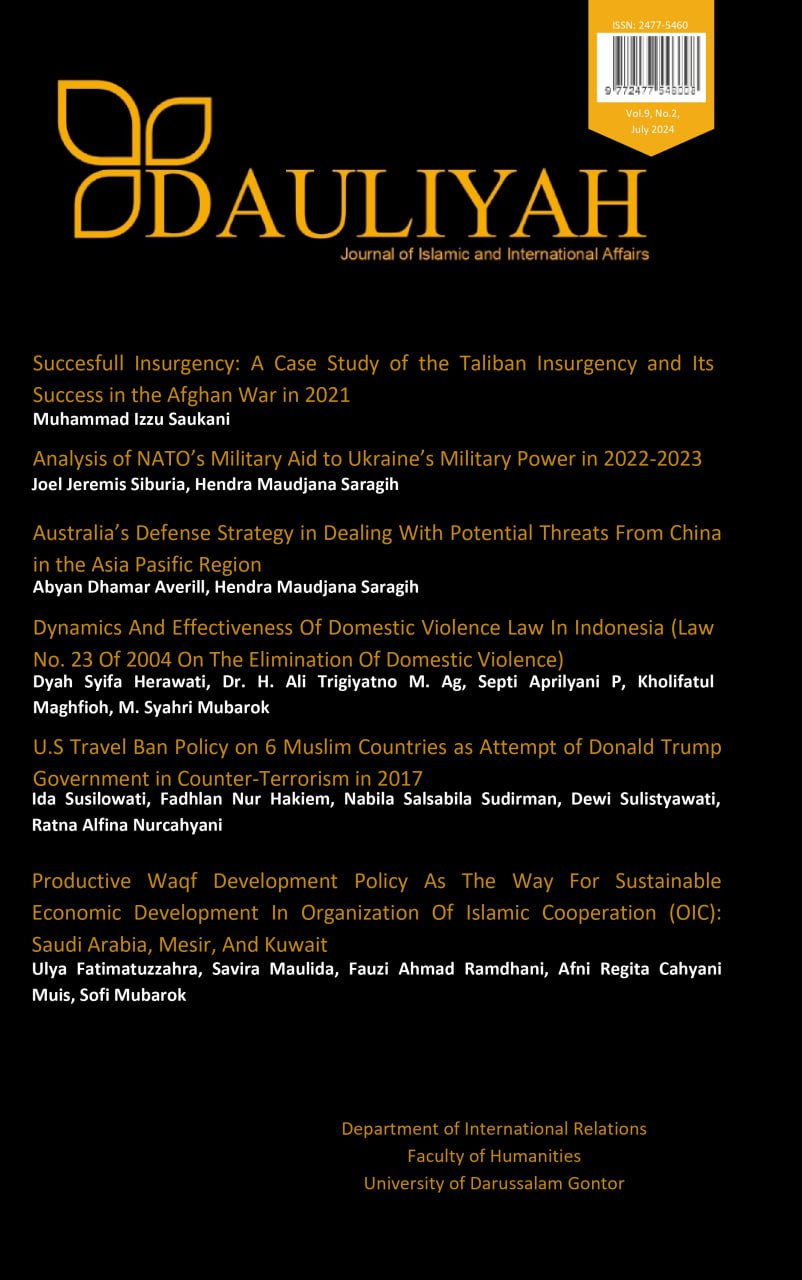
Dynamics and Effectiveness of Domestic Violence Law in Indonesia (Law No. 23 of 2004 on the elimination of domestic violence)
DOI:
https://doi.org/10.21111/dauliyah.v9i2.15201Abstract
Cases of domestic violence in Indonesia are still relatively high, even though it is known that the law governing it has existed since 2004. Then how are the main objectives that the law wants to achieve in dealing with cases of domestic violence and its effectiveness. In this literature review, researchers used a normative descriptive method supported by data in the form of books, journals, and other relevant research. The result is that the main purpose of the PKDRT law is to maintain the integrity of a harmonious and prosperous household, this is not in line with the sanctions given so that it has a negative impact on the perpetrators and victims who both have family relationships. Then another effort that is more in line with this law is restorative justice with certain considerations. Restorative justice is an implementation of past Islamic law that has been exemplified by the Prophet and his companions. Meanwhile, according to its effectiveness, Indonesian society has not effectively implemented this PKDRT Law due to a weak legal culture and legal awareness.References
A Muchlishon Rochmat. NU online. (2018). https://nu.or.id/sirahnabawiyah/ kala-rasulullah-bertengkar-dengan-istrinya-puuMR.
Amalia, Rizky, Hafrida dan Elizabeth Siregar. (2021). Perbandingan Pengaturan Tindak Pidana Kekerasan Dalam Rumah Tangga dalam Hukum Pidana Indonesia dan Hukum Pidana Malaysia. Pampas:Journal Of Criminal 2, no. 2
Anonim. (2002). Kamus Besar Bahasa Indonesia. Balai Pustaka. Jakarta.
Doktor, P., Dirasah, P., Islam, U., & Sunan, N. (2021). Restorative justice dalam hukum pidana islam perspektif filsafat hukum islam.
Fakultas, W., Universitas, H., Gunung, S., & Email, C. (2014). ISLAH MENURUT HUKUM ISLAM RELEVANSINYA. 3(2), 29–42.
Fatoni, Syamsul. (2016). Pembaharuan Sistem Pemidanaan: Perspektif Teoritis dan Pragmatis untuk Keadilan. Setara Press, Malang.
Friedman, Lawrence M. (2009). Sistem Hukum Perspektif Ilmu Sosial (A Legal Sistem A Social Science Perspective). diterjemahkan oleh M.Khozim. Nusa Media. Bandung.
Haryanto, R. B. (2021). Penerapan keadilan restoratif dalam penegakan hukum tindak pidana oleh kejaksaan tesis.
HS, Salim dan Erlies Septiana Nurbani. (2017). Penerapan Teori Hukum Pada
Penelitian Tesis dan Disertasi. PT. Raja Grafindo Persada. Jakarta.
Indonesia, R. (2004). Presiden republik indonesia. Undang Undang Penghapusan KDRT.
Kemenpppa. Simfoni-PPA. (2024). https://kekerasan.kemenpppa.go.id/ringkasan.
Parasdika, Aulia. Andi Najemi, dan Dhenny Wahyudi. (2022). Penerapan Keadilan Restoratif Terhadap Tindak Pidana Penganiayaan. Pampas: Journal Of Criminal 3, no. 1
Putri Zaidhatul, F., Kurniati, K., & Asni, A. (2023). Violence in the Household (KDRT) Perspective Maqashid Sharia (Case Study at Sungguminasa District Court). International Journal of Islamic Studies, 3(2), 191–207. https://doi.org/10.24252/ijis.v3i2.43355
Rosalin, S. (2023). Pendekatan Restorative Justice Dalam Penyelesaian Tindak Pidana Kekerasan Dalam rumah Tangga Perspektif Kemanfaatan Hukum. PAMPAS : Journal Of Criminal Law, 4(2), 174–183. https://doi.org/10.22437/pampas.v4i2.27009
Sahabat, L., & Magelang, P. (2009). purposive sampling . 3(2), 33–50.
Waluyo, Bambang. “Desain Fungsi Kejaksaan Pada Restorative Justice”. Depok. Rajawali. 2017.
Qur’an Kemenag.(2019). Terjemahan Kemenag.
Downloads
Submitted
Published
Issue
Section
License
Copyright (c) 2024 DAULIYAH

This work is licensed under a Creative Commons Attribution-NonCommercial-ShareAlike 4.0 International License.
All articles published in Dauliyah Journal are licensed under a Creative Commons Attribution 4.0 International License (CC BY 4.0).
This license permits anyone to copy, redistribute, remix, transform, and build upon the material for any purpose, even commercially, provided the original work is properly cited.


