
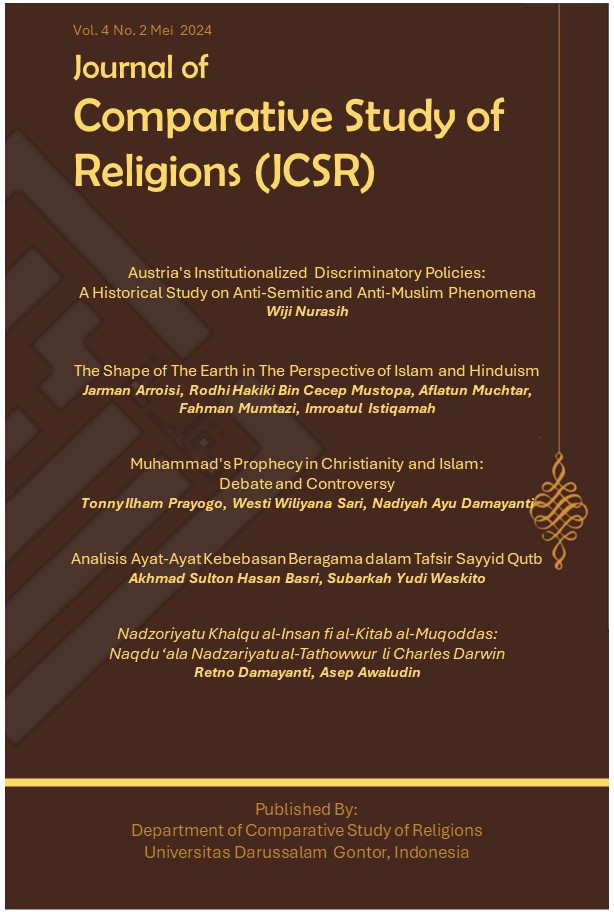
Nadzoriyatu Khalqu al-Insan fii al-Kitaab al-Muqoddas: Naqdu 'ala Nadzariyati al-Tathowwur lii Charles Darwin
DOI:
https://doi.org/10.21111/jcsr.v4i2.12095Abstract
This article explores the fundamental differences between these theological and scientific views through analysis of the text of the Bible and Darwin's theory of evolution which aims to explain the definition of human creation and the theory of evolution and analyze the theory using verses in the Bible. To complete this writing, the researcher used the descriptive-critical analysis method to examine and criticize the theory using a naturalist worldview approach to the ideas presented by Darwin. The result is that Charles Darwin's theory of evolution becomes a new paradigm regarding human origins which denies divinity in its creation. Darwin's theory of evolution is a scientific concept which states that living species experience development through the process of natural selection. In the Book of Genesis it explains that humans were created by God, Adam was formed from the dust of the ground and breathed the breath of life into his nose and created Eve from Adam's rib, this shows that humans were created directly by God and are considered special among other creations.References
C. Petri. Ajaran Evolusi Dan Iman Kristen. Jakarta: Gunung Mulia, 2001.
Charles Darwin. On the Origin of Species by Means of Natural Selection. London: John Murray, 1859.
———. The Descent of Man, and Selection in Relation to Sex. London: John Murrary, 1871.
———. The Origin of Species by Means of Natural Selections. Yokyakarta: Indoliterasi, 2020.
Elfri Darlin Sinaga. Pandangan Sains Dan Alkitab Tentang Asal-Usul Dan Penanggalan Penciptaan Manusia, n.d.
Endang Saifuddin Anshari. Ilmu Filsafat Dan Agama. 7th ed. Surabaya: Bina Ilmu, 1897.
Hamdani. Filsafat Sains. Bandung: Pustaka Setia, 2011.
J. A. Telnoni. Kejadian Pasal 1-11. 1st ed. Jakarta: Gunung Mulia, 2017.
James Montgomery Boice. Dasar-Dasar Iman Kristen. Surabaya: Andhika Plaza, 2009.
John Barton, Jonh Muddiman. The Commentary of Bible. New York: Oxford University Press, 2007.
John J Davis. Eksposisi Kitab Kejadian. 2nd ed. Malang: Gandum Mas, 2014.
Jonar T. H. Situmorang. Matinya Teori Evolusi. Yokyakarta: pustaka ANDI, 2006.
Jonathan Howard. Darwin Pencetus Teori Evolusi. Jakarta: Pustaka Utama Grafiti, 1991.
Maurice Bucaille. Asal-Usul Manusia Menurut Bibel, Al-Qur’an Dan Sains. Bandung: Mizan, 1992.
Paskalis Edwin I Nyoman Paska. Perempuan Sumber Dosa? Malang: Pustaka Dioma, 2006.
Rosman Yunus. Et Al. Teori Darwin Dalam Pandangan Islam Dan Sains. Jakarta: Prestasi, 2006.
Siska Deviyanti, Hasruddin. “Analisi Pengetahuan Dan Sikap Siswa Terhadap Teori Evolusi Pada Siswa Kelas XII IPA SMA Negeri 16 Medan.†Jurnal Pelita Pendidikan 2, no. 1 (2019). https://jurnal.unimed.ac.id/2012/index.php/pelita/article/view/6621/0.
Stella Y.E. Pattipeilohy, John C. Simon. “Pandangan Dunia Evolusioner Dan Respon Iman Kristen.†Jurnal Teologi Dan Pendidikan Kristen Kontekstual 2, no. 1 (2019). https://jurnalbia.com/index.php/bia/article/view/66/pdf.
الكتاب المقدّس،أي كتب العهد القديم والعهد الجديد، الترجمة العربية المشتركة من اللغات الأصلية مع الكتب اليونانية منالترجمة السبعينية. لبنان: دار الكتب المقدّس, 1995.
Ù…Øمد ÙØªØ Ø§Ù„Ù„Ù‡ كولن. Øقيقة الخلق ونظرية التطوّر. إستانبول: دار النيل والنشر, 2006.
Downloads
Published
How to Cite
Issue
Section
License

This work is licensed under a Creative Commons Attribution-NonCommercial-ShareAlike 4.0 International License.
The author whose published manuscript approved the following provisions:Â
The right of publication of all material published in the journal / published in the JCSR is held by the editorial board with the knowledge of the author (moral rights remain the author of the script).
The formal legal provisions for access to digital articles of this electronic journal are subject to the terms of the Creative Commons Attribution-NonCommercial-ShareAlike 4.0 International License (CC BY-NC-SA 4.0), which means that JCSR reserves the right to save, transmit media or format, Database), maintain, and publish articles without requesting permission from the Author as long as it keeps the Author's name as the owner of Copyright.
Printed and electronic published manuscripts are open access for educational, research and library purposes. In addition to these objectives, the editorial board shall not be liable for violations of copyright law.


2.png)
